
Here’s the deal: life is a journey of constant self-improvement. It’s filled with experiences that, if we let them, can become lessons that guide us toward becoming our best selves.
Self-improvement is never truly complete. Instead, it’s more about growing and discovering more about ourselves as we evolve.
Today, I want to share with you some crucial lessons to help you along your journey. Everything I share is drawn from the wisdom of personal experience and faith.
1. Document Your Journey
To appreciate how far you’ve come, you need to remember where you started. Documenting your experiences, thoughts, and aspirations can serve as a powerful reminder of your growth.
I speak absolute truth when I tell you, I don’t document nearly as often as I should. And I can’t count just how many times I’ve looked back desperately wishing I had documented more of my journey.
You won’t always get it right, and that’s okay. But make it a habit to document as often as possible.
Start a simple journal and capture the “who, what, where, when, and dialogue” of emotionally moving experiences. These stories will not only be a testament to your journey but also provide you with rich memories and valuable lessons.
If you’re looking for recommendations on the best Journaling App to start with, read this article: Best Journaling App: Why I Love the Daybook App. You can thank me later. 😉
Keeping a record of your journey allows you to reflect on your progress and the challenges you’ve overcome. It can be incredibly motivating to look back and see how much you’ve grown.
Additionally, this practice helps you recognize patterns in your behavior and decisions, making it easier to continue improving.
Take this free personality test to learn more about your personality.
2. Communicate Positively
The Bible tells us that there is life and death in the power of the tongue, so trust me when I tell you, your words carry power.
When someone gives you constructive feedback, don’t simply reject it by being defensive. Instead of saying “I know,” try saying, “Yes, I’ve been thinking about that; however, I first need to XYZ, then I’ll get right on that.” If you intend to reject the suggestion, try “I appreciate your feedback; however, I’m confident in my decision.”
This approach acknowledges the other person’s input while explaining your own process.
Similarly, replace “yes, but” with “yes, and” to avoid sounding defensive and to build on others’ ideas constructively.
Positive communication fosters better relationships and opens the door to more meaningful conversations. It shows respect for the other person’s perspective and encourages collaboration.
Of course, this is something that comes with a lot of practice, so don’t expect results right away. Just remember that by choosing your words carefully, you can create a more supportive and constructive dialogue.
3. Trust the Process
Stop trying to predict when and how things will happen. Focus on why you are on this journey. Trust in yourself and have faith that God will deliver on His promises.
Remember, your commitment must match the magnitude of your aspirations. In Chapter 2 of Don’t Die Broke, I share a true story of how I asked God for something big—I wanted to leave my job to work from home. I learned quickly that as you ask big things of God, you must be ready to invest big efforts.
Trusting the process means having patience and perseverance. It’s easy to get discouraged when things don’t happen as quickly as you’d like, but maintaining faith in your journey helps you stay committed.
Every step, no matter how small, brings you closer to your goals.
4. Face Discouragement with Courage
Often, those who lack courage will try to discourage you. However, you must recognize that their negativity stems from their own insecurities. Stand firm in your journey and remain courageous in the face of doubt.
Try drowning out the negative voices of others by repeating positive affirmations. If you don’t know where to start, I have a free booklet with 100 Affirmations to Shift Your Mindset and Transform Your Life, which you can download by clicking this link: Download FREE Booklet.
Side note: When you’re done, be sure to check out the other free downloads as well.
Back to the point at hand. Courage is essential for overcoming obstacles and pushing through difficult times.
When faced with discouragement, remind yourself of your purpose and the reasons behind your journey. Surround yourself with supportive individuals who uplift and encourage you.
My newsletter is a good place to start.
5. Learn the Difference Between Help and Exploitation
Being helped and being taken advantage of can sometimes look similar. Learn to identify the difference between people who genuinely help and those who seek to exploit you.
Trust your intuition and set boundaries when needed.
It’s important to protect yourself from those who might take advantage of your kindness, desperation, or vulnerability. Establish clear boundaries and communicate them lovingly, but assertively.
Read my story here: From Expendable to Empowered: My Personal Growth Story.
Genuine help will feel supportive and respectful, whereas exploitation will feel draining and one-sided. It will often feel like there is an ulterior motive.
6. Embrace Divine Guidance
God’s plans for you may not always come with detailed instructions. In fact, they rarely ever do, and believe me, I get it; it can be frustrating. But if you let Him, He will guide you step by step.
Trust in His direction, and be patient as His plan unfolds. Each step you take will reveal the next one.
Embracing divine guidance requires faith and patience. Trust that God has a plan for you, even if you can’t see the entire path. Be open to the opportunities and lessons He places in your life, and have confidence that each step is leading you in the right direction.
When you’re ready, read to discover How God Speaks to You Personally.
7. Take Action from Learning
Reading a hundred self-improvement books and not learning or taking action is pointless. That’s like staring at a plate of well prepared meal and never actually eating it. It cannot nourish you that way.
Try this instead: when reading a self-improvement book, conclude each chapter by writing down specific actions based on the lessons learned. Commit to taking those actions within a week.
This practice turns knowledge into tangible progress. Since learning is most effective when coupled with action.
By implementing the lessons you learn, you will create real change in your life. This approach ensures that your knowledge translates into growth and improvement. As someone who wrote a self-help book, take my word: you do not need another one. You’re only chasing dopamine. What you need is action.
8. Evaluate the Cost
Nothing in life is free. This is a lesson I drill into my boys. Always ask yourself, “What is the real cost?” and “Is the cost worth it?” These questions will help you make informed decisions and prioritize what truly matters.
Every choice you make or don’t make has a cost. Every “yes”, “no”, “not now”, or “maybe” costs you or someone something. Understanding the cost of your decisions will help you to make choices that align with your values and goals.
Consider the time, effort, and resources required for each decision, and weigh them against the potential benefits.
This practice ensures that your actions are purposeful and strategic.
9. Redirect Negative Self-Talk
Replace negative self-talk with positive affirmations. Instead of saying, “I’m going to fail,” try saying, “I’m trying my best, and that’s important for growth.”
Positive self-talk fosters resilience and a growth mindset.
Negative self-talk can undermine your confidence and hinder your progress. By consciously choosing positive affirmations, you shift your mindset towards growth and possibility.
This practice builds self-esteem and resilience, enabling you to overcome challenges more effectively.
10. Take Responsibility
When things go wrong, avoid blaming others. Ask yourself, “What part of this am I responsible for?” This introspection leads to personal growth and helps you identify areas for improvement.
Taking responsibility for your actions empowers you to make changes and learn from your mistakes. It fosters accountability and encourages you to take control of your life.

By focusing on your role in each situation, you can identify areas for growth and development.
11. Self-Validation
Whatever you seek from others, give it to yourself first. Unless you start practicing to validate yourself, no external validation will ever feel sufficient.
Self-validation builds a strong foundation of self-worth and confidence. When you rely on external validation, you give others control over your happiness.
In this way, no matter how much work and effort you put into something, you’ll never feel like it’s good enough because you are relying out outsie sources to tell you it’s good enough. At the core, you’re really looking to outside sources to tell you that YOU are enough.
Stop it. Stop it now.
Yes, there is always room for improvement, and you should be open to constructive feedback where necessary. That said, there is a stark difference between seeking feedback for improvement and seeking validation from others.
By affirming and appreciating yourself, you cultivate inner strength and resilience.
12. Immerse Yourself in the Word of God
Spend more time in the Word of God. It provides guidance, comfort, and strength. Let it be your foundation and inspiration.
The Word of God offers wisdom and direction for every aspect of life. It’s not about perfection or performance; it’s about relationship. Regularly immersing yourself in scripture strengthens your faith and provides clarity.
It serves as a source of comfort and encouragement, guiding you through life’s challenges.
Read How God Speaks to You Personally.
13. Recognize and Create Patterns
Patterns simplify actions. Learn to recognize, use, and create patterns or habits in your life. When actions become habits, they no longer require discipline.
Forming good habits leads to a disciplined and purposeful life. Patterns and habits streamline your actions, making them more efficient and less reliant on willpower.
Read Atomic Habits.
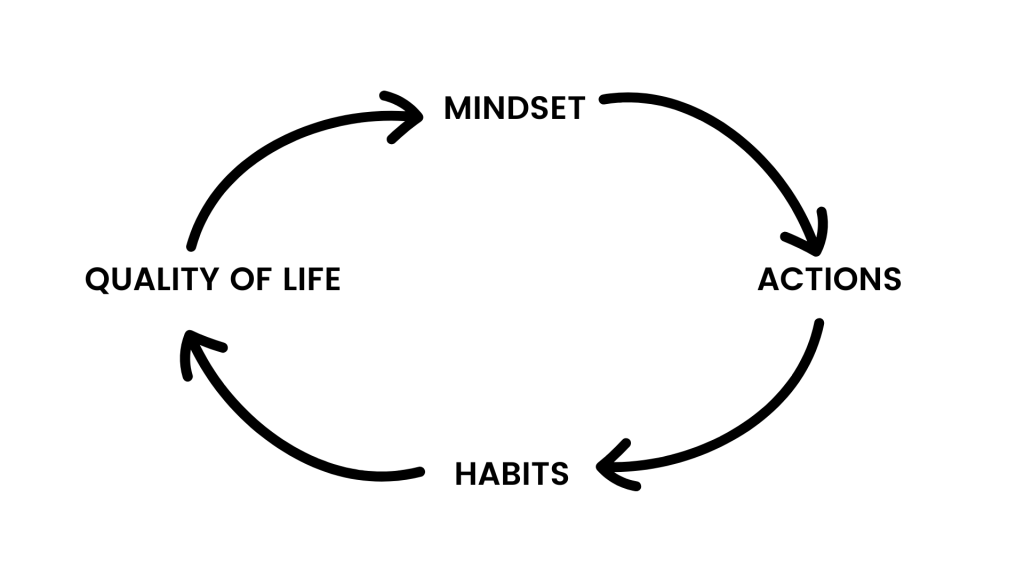
By establishing positive routines, you create a foundation for consistent growth and success. Identify patterns that support your goals and integrate them into your daily life.
14. Expect Resistance
When you strive to change your life, expect resistance from those around you. Your growth may highlight their need for change in a season when they are not ready or willing to change, leading to criticism and a lack of support.
This is why self-validation is so important. If you rely on validation from others, these moments of criticism will discourage you from your goal. Nevertheless, you must remember your “why”, stay focused on your path, and ignore the negativity.
Change can be uncomfortable for those who are used to the status quo. As you grow and evolve, others may feel threatened or left behind.
Recognize that their resistance is a reflection of their own fears and insecurities. There’s a story in my book about how my friends mocked me for desiring to work from home full-time. It’s a bit unfathomable in today’s working climate, but at that time, working from home in Jamaica drew a lot of skepticism.
At that time, I worked in a call center, and many of my colleagues were also desirous of working from home, but they feared the negative connotations associated with working from home back then.
You can read the full story in my book, but I share this here to illustrate that I had to push out the negative voices in order to go after my dream.
Sidebar: I was successful. 😉
Stay committed to your journey and surround yourself with supportive individuals.
15. Language Shifts for Positivity
I’ll keep this point short because we already touched on the topic of positive communication. However, I wanted to reiterate that simple language shifts can change your mindset:
- Try saying “I get to” instead of “I have to.”
- And say “I will” instead of “I should.”
For example, “I get to pick up my kids after work” and “I will start making healthier food choices.”
These shifts create a sense of gratitude and commitment.
Language shapes our thoughts and attitudes. By choosing words that reflect positivity and intention, you cultivate a more optimistic and proactive mindset.
Read How Gratitude Improves The Quality of Your Life
16. Be Your Own Cheerleader
The songwriter says sometimes you’ve got to encourage yourself in the Lord. Be your own cheerleader, celebrating your progress and motivating yourself to keep moving forward.
Self-encouragement is vital for maintaining motivation and resilience. Acknowledge your achievements, no matter how small, and remind yourself of your strengths and capabilities.
17. Celebrate Small Wins
On that same topic, every step forward, no matter how small, is progress. Celebrate these small wins to stay motivated and to recognize your continuous growth.
Acknowledging your achievements, no matter how minor they may seem, keeps you motivated and reinforces your commitment to your goals.
Celebrating small wins creates a positive feedback loop, encouraging you to keep moving forward.
18. Seek Continuous Improvement
As you’ll repeatedly hear me say, self improvement is not a destination. It’s a journey. There is no end, so you should always strive to be better than you were yesterday. Continuous improvement is key to long-term success and fulfillment.
Adopt a mindset of lifelong learning and growth. Seek opportunities to improve yourself, whether through education, new experiences, or personal reflection.
This commitment to continuous improvement ensures that you are always moving forward and evolving. It erases the potential for stagnant comfort.
19. Practice Gratitude
I’ve shared before that I grew up in poverty. Even so, I believe that a lot of the emotional pain we felt wasn’t solely due to the stresses of having scarce resources. Rather, it was because of our lack of gratitude.
No, practicing gratitude would not have suddenly made us wealthy; instead, it would have shifted our focus. Gratitude shifts your focus from what you lack to what you have.
Read How Gratitude Improves The Quality of Your Life.
Gratitude is a powerful tool for maintaining a positive outlook on life. By regularly acknowledging the good things in your life, you shift your focus from what’s missing to what’s abundant.
This practice fosters contentment and joy.
20. Build Resilience
Life will always have its fair share of challenges. Show me the person whose life has no challenges, and I’ll show you a person who is not living.
Resilience is the ability to bounce back from setbacks. You cultivate resilience by facing challenges head-on and learning from your experiences.
Resilience enables you to navigate life’s ups and downs with grace and strength.
Embrace challenges as opportunities for growth, and develop healthy strategies to handle stress and adversity. Building resilience prepares you to handle whatever life throws your way.
In conclusion
My final encouragement to you today is that you embrace these lessons, trust the process, and remain steadfast in your journey of self-improvement. With faith, determination, and positivity, you will achieve great things and inspire others along the way.
Remember, the journey is just as important as the destination. Celebrate your progress, learn from your experiences, and continue striving to be the best version of yourself.
-Lis











Leave a comment